About
04 Jan 2026Max Nicosia PhD’s Intro
I am a PhD graduate who ran his own company (Cambridge Intelligent Systems UK Ltd.) providing commercial research services (prototypes/simulations) to the UK MoD.
I have over 10 years of hands‑on experience in high‑performance safety‑critical software and hardware integration, system design, and evaluation across a variety of technologies and programming languages.
Holder of a 5-year visa.
Table of Content
Skills
LANGUAGES / LIBRARIES / PARADIGMS / SOFTWARE
C/C++ • C# • Python • Java • Android / Gradle • iOS XCode • R • TypeScript • JavaScript • Ruby • React • CSS • MySQL/SQL • AR/VR • TCP/UDP/IP • WebSockets • AWS • Bash • PowerShell • Linux • OpenMP • MPI • pthreads • GitHub • Boost • psutil • scikit‑learn • PyTorch • scipy • numpy • d3.js • LATEX
DEVELOPMENT AND PROGRAMMING
• Agile development • Scrum Development • Test‑driven development • Designing and building custom APIs to expose functionality for information feeds and/or hardware control • Development of custom 2D/3D adaptive interfaces • Custom 2D/3D interactive visualisations development for real‑time live object tracking and/or data stream monitoring of stats to display visualisations using d3.js in TypeScript with React • Rapid prototyping and integration of proprietary interfaces / systems for demos • Middleware design and implementation for multi‑platform integration • Multithreading / lockless coding / synchronisation / memory barriers • Memory management for restrictive hardware and/or operations • Interfacing with hardware drivers, e.g. sensors • Sensor fusion and machine learning model building • MapReduce implementation and integration (Hadoop) • Design and implementation of custom network protocols at kernel level • TCP / UPD / WebSockets • Custom network paradigms, e.g. data‑centric, publish‑subscribe and distributed networks
UNITY / UNREAL
• Use of assets such as Mixamo characters • Importing/modifying and blending character animations • Textures • Lighting effects / filters • Some shader experience • LOD use and configuration • Dynamic asset loading • Spline implementation and collision avoidance for custom pathfinding, e.g. vehicles and pedestrians • Behaviour trees and blackboards for characters • Custom object serialisation for loading and saving, e.g. data‑structure marshalling • Blueprint design
ANALYTICAL / RESEARCH
• Statistical testing • Statistical model fitting • Machine learning models • Participant and participant‑free design and execution • Big data management and analysis • Scientific data visualisation / presentation
PROJECT MANAGEMENT
• Stakeholder meetings • Requirement elicitation • Milestone allocation and prioritisation • Live demos and presentations
Work Experience
Technical Lead (XR Safety / Driver Sync Assist) - Woven by Toyota
Jun 2024 - Mar 2026
Tokyo, Japan
- Development of safety simulations in Unity to match researched hazard use‑cases and verification cases.
- Designed Software Architecture for the simulation system that could replay real‑world collected data.
- Integrated Vehicle Physics Pro library for realistic physics simulation.
- Developed C/C++ wrappers for CAN data integration with various controllers and system/sensor interfaces.
- Development and execution of validation and verification experiments of safety logic with human participants.
- Validated simulation accuracy through use‑case testing.
- Reviewed Pull Request to ensure quality assurance, style, etc.
- Structured / refactored existing code base to integrate into our product.
- Assetasation of simulation logic for team collaboration.
- Participated in strategy meetings for long‑term division growth and OKR planning.
- Presented and demoed the state of system at quarterly VIP events.
- Development of future technologies and patents (see patents).
Strategic Software Development Team Lead - FinStadiumX
Apr 2024 - May 2024
Tokyo, Japan
- Designing and developing new in‑house C++ low‑latency, lockless software components for High‑Frequency Trading services for Linux AWS‑hosted servers (Equities, Futures, Dark Pools, etc).
- Maintaining legacy C++ software components for financial transaction services.
- Using advanced C++ low‑latency paradigms/features such as memory barriers, ring buffers, lockless coding, memory pools and cache alignment strategies.
- Profiling legacy components to identify candidates for optimisation and/or redesign and reimplementation.
- Developing build procedures for components and libraries in Linux/Windows (VS Studio, CMake and Make).
- Ensuring compliance with FIX Protocols across components.
- Maintaining development, test and production environment management.
- Building documentation of legacy and new components and features.
Head of Research - Tokyo Academics
Nov 2022 - March 2024
Tokyo, Japan
- Managed a team of ≈20 part‑time researchers who supervise young students’ research projects.
- Managed division, including sales and marketing strategy.
- Exceeded YTD sales performance by 125%, well above the 50% target
- Supervised CS projects, for prototyping and/or in machine learning in various languages.
Director - Cambridge Intelligent Systems UK Ltd
Nov 2017 - June 2025
Cambridge, England, United Kingdom · Remote
- Technical and lead developer for all projects (see projects for details).
- Responsible for all director duties including company tax compliance and payroll.
- Writing research proposals and bidding for contracts.
- Responsible for project management, stakeholder liaison and deliverables.
Associate Researcher - Department of Engineering at the University of Cambridge
Oct 2019 - Jul 2020
Cambridge, England, United Kingdom · On-site
- Conducted research in the design of attention-aware systems.
- Included developing various applications and support systems in C++, Phyton and Javascript/TypeScript and running experiments to validate various hypotheses/concepts.
- The applications ranged from distributed middleware systems that interacted with sensors through high-speed networking to web applications that made use of the platform through a purposely built API.
Consultant - CAMBRIDGE UNIVERSITY TECHNICAL SERVICES LIMITED
May 2017 - Dec 2017
Cambridge, England, United Kingdom · On-site
- Technical and lead developer for all projects (see projects for details).
- Responsible for all director duties including company tax compliance and payroll.
- Writing research proposals and bidding for contracts.
- Responsible for project management, stakeholder liaison and deliverables
Research Assistant - University of St Andrews
Jan 2012 - Sep 2012
St Andrews, United Kingdom · On-site
-
Fully funded by a research grant from Dr. Kristensson.
-
Worked under the supervision of Dr. Kristensson and Dr. Oulasvirta on investigating how users perceived their own performance while using computer interfaces with a Fittz law task.
-
During the project, I built a series of experiments in C# using the XNA framework for the Microsoft Surface PixelSense 2.0 to collect and model how users perceived their change in performance while manipulating the ID of the interface.
-
I also tested models using R and generated plots using MatplotLib.
-
The results were published on the paper ‘‘Modeling the perception of user performance’’ in CHI 2014 (See publications for more info)
iGEM Intership - University of St Andrews
Jun 2011 - Sep 2011
St Andrews, United Kingdom · On-site
- Funded by SULSA and WellcomeTrust
-
Won Gold Medal
- We investigated the development of a kill switch to deliver a drug payload.
- I contributed to project design, helped with various lab experiments, did the modelling for the reaction rates using MATLAB and maintained the team’s wiki. After our demo, the team won a Gold Medal.
Research Assistant - University of St Andrews
May 2011 - Jun 2011
St Andrews, United Kingdom · On-site
Worked under the supervision of Dr. Musolesi.
- The internship was funded by an EPSRC grant from Dr. Musolesi.
The first one focused on the potential introduction of killing genes into mosquitoes to reduce disease transmission.
The project focused on modelling various biological processes. I designed and implemented a simulator in Python to model infection rates on populations of mosquitoes subject to transmission and resistance coefficients. The simulator generated constrained graphs to emulate mosquito mating patterns for simulations. Over the course of the project, I produced various AWK and BASH scripts to automate various plots in R. The second project focused on modelling and finding patterns by tracking seals off the coast of St Andrews. I used various clustering algorithms to find frequented places and patterns of behaviour by seals.
Software Developer - University of St Andrews
Aug 2010 - Sep 2010
St Andrews, United Kingdom · On-site
- Worked on the implementation of a package to provide binary encoding for the GAP mathematical software (OpenMath).
- GAP Package Link.
C Developer - DTU (Technical University of Denmark)
C DeveloperC Developer
Jun 2010 - Aug 2010
Copenhagen, Denmark · On-site
-
Collaborated on accessibility features for the Evince PDF reader (GNOME desktop). E.g.: Orca integration and navigation.
-
Produced documentation and guides for blind users to install Vinux (Linux Ubuntu for visually impaired users)
Projects
Attention‑Aware System for Mixed and Augmented Reality Controls in Armoured Vehicles - DSTL Open Call for Innovation Cycle 2 – Project Ref: ACC2006330
Duration: Mar 2020 - Feb 2021
Project done under Cambridge Intelligent Systems UK Ltd
Objectives
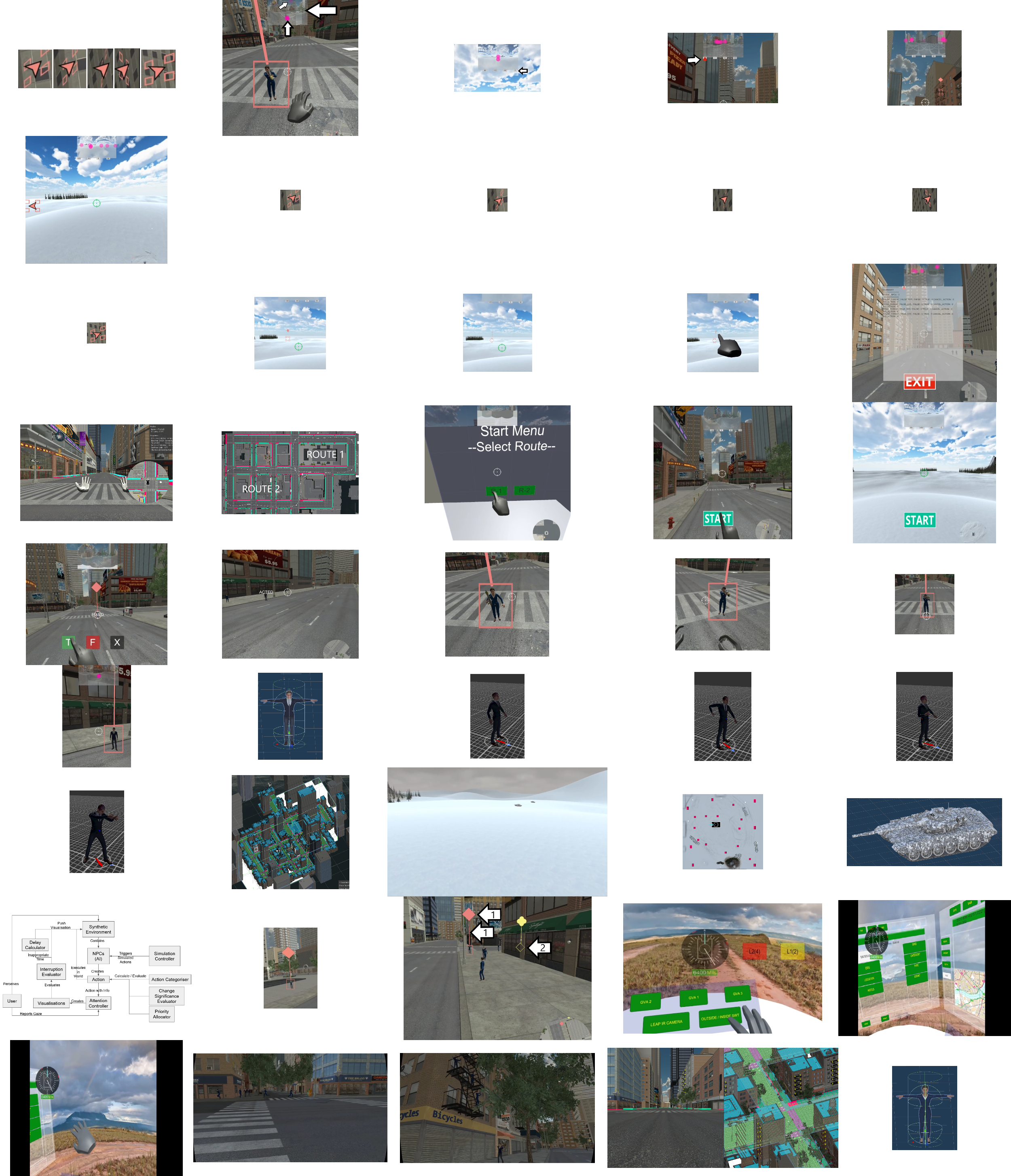
The project focused on developing a VR simulation environment that allowed testing operators’ reactions to various configurable threats under different levels of aiding visualisation mechanisms. The mechanisms made use of the operator’s gaze direction to adapt themselves and/or deactivate, as well as input taken from menus interacted using the UltraLeap sensor.
Project highlights and deliverables
- Held regular meetings with DSTL members to distil requirements for the final system.
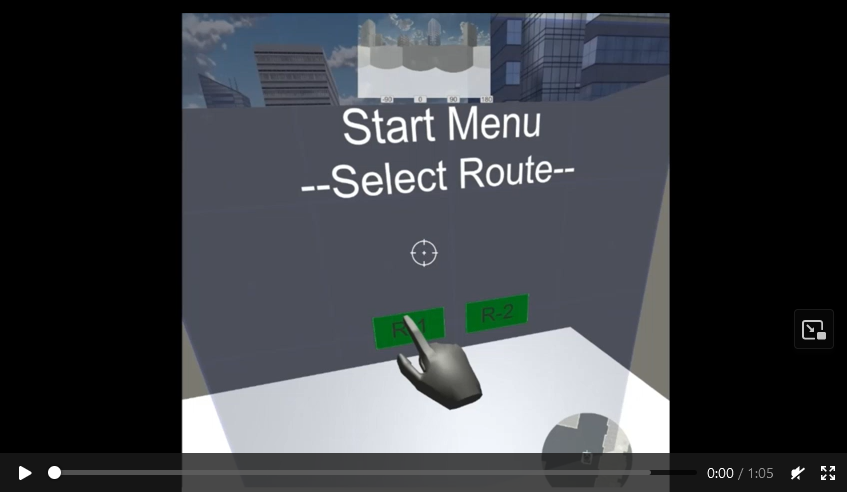
- Delivered a VR simulation environment developed in Unity Engine (C#) using the UltraLeep sensor and Oculus Rift headset capable of deploying pre-configurable scenarios in two environments (an open snowy landscape and an urban city).
- Demonstrated through interim and final live demos the capabilities of the environment to stakeholders at the UK MoD armed forces and DSTL.
Capabilities of the simulation environment included
- 3D models for human and vehicle threats that would suit the simulation environments.
- NPCs behaviours, including pathfinding, spawning, threat escalation and their corresponding animations/sounds.
- Parameterisable capabilities in the system to change the number of threats, intervals, visualisations and the path followed through the simulation.
- Standard NATO threat nomenclature symbol tagging on 3D models.
- 3 dynamic attention-aware visualisations: 1) Tracking of attended and non-attended areas in 360-world map and minimap, 2) Out-of-view pointers to threats with extra animations if not attended to, and 3) Animated motions to NATO threat nomenclature symbols when left unattended.
The listing of the project can be seen in this UK Government listing.
Mixed Reality Controls for Armoured Vehicles - DSTL Open Call for Innovation Cycle 3 – Project Ref: ACC2000981
Duration: Dec 2018 - Oct 2019
Project done under Cambridge Intelligent Systems UK Ltd
Objectives
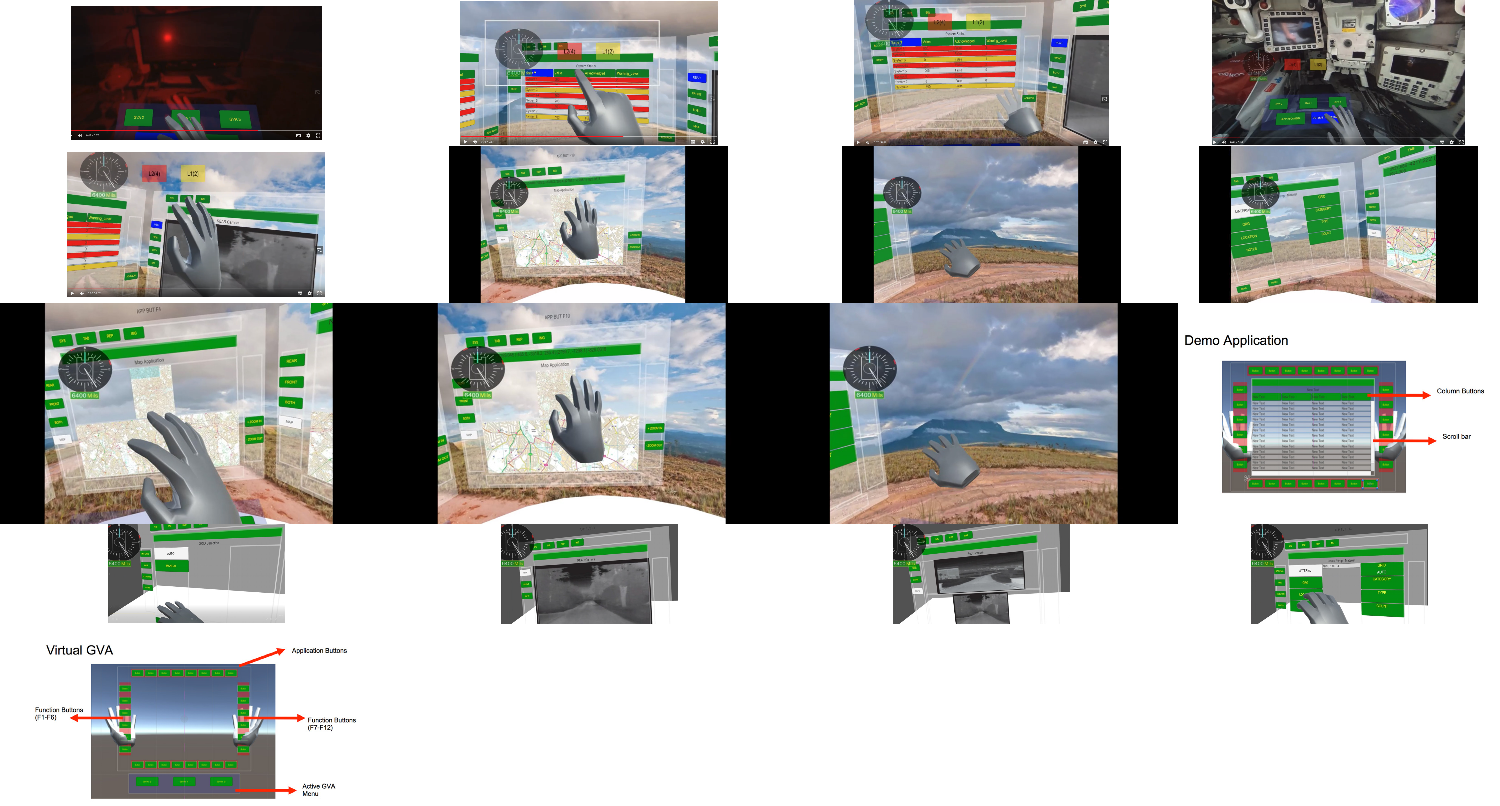
The project’s objective was to compile the requirements and deliver a simulation environment that would allow trialling the deployment of a new VR UI, based on the General-Vehicle-Architecture (GVA) architecture with UltraLeap capabilities, to be used inside armoured vehicles. VR was used to simulate an AR deployment, as such, the simulation environment replicated the views from inside and outside the vehicle as well as allowed operators to see their arms during operation.
Project highlights and deliverables
- Held regular meetings with DSTL/MoD members to distil requirements for the final system.
- Delivered a VR simulation environment developed in Unity Engine (C#) using the UltraLeep sensor and Oculus Rift headset capable of deploying pre-configurable scenarios in two environments (an open snowy landscape and an urban city).
- Demonstrated through interim and final live demos the capabilities of the environment to stakeholders at the UK MoD armed forces and DSTL.
- The final deliverable consisted of the VR environment (Oculus Rift) built in Unity (C#) UltraLeep input capabilities. The environment allowed interaction with various GVA interactable menus that allowed switching between in- and out-of-vehicle views with passthrough capabilities for arms/hands.
Capabilities of the simulation environment included
- Multi-virtual fully-interactable GVA UI deployment within the environment.
- Fully-interactable GVA menus of various types following domain specifications (shape, colours, behaviours)
- In- and out-of-vehicle spherical 360 simulated cameras that could be rotated/directly manipulated through touching gestures (scrolling) using the UltraLeap.
- Multi-axis cameras for outside and inside views from the vehicle.
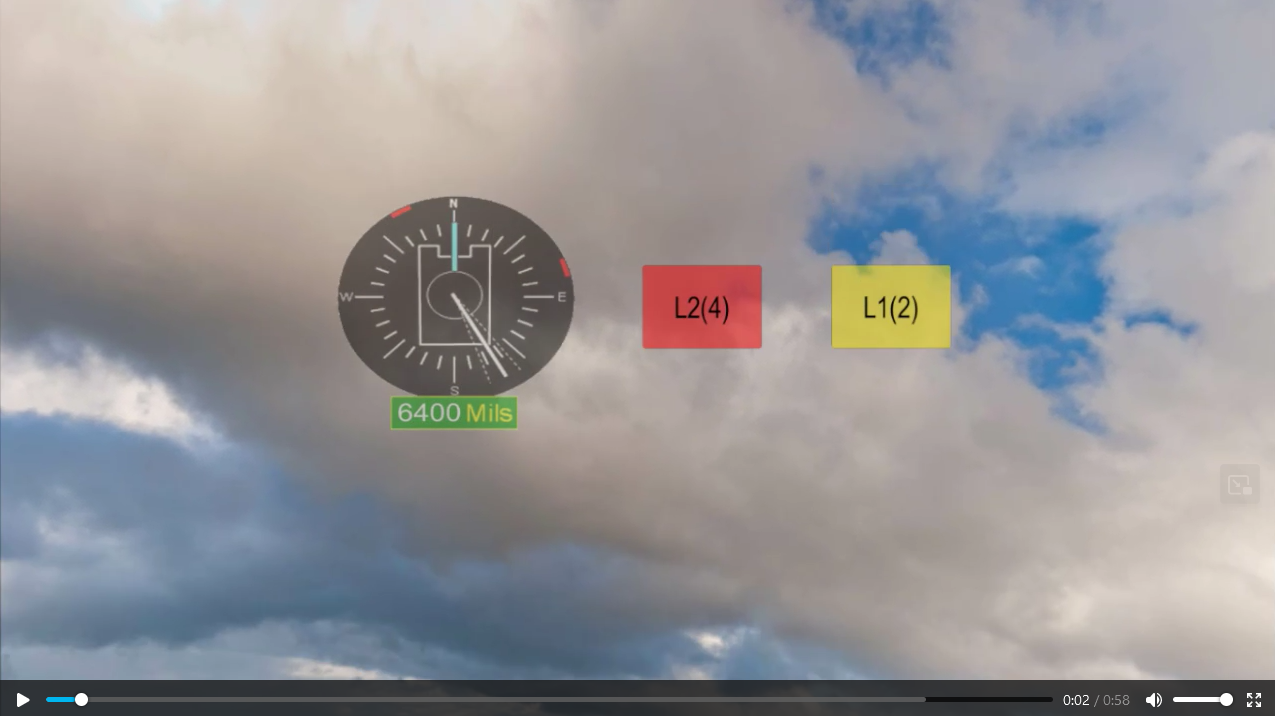
- Head-up UI to incorporate key moving platform controls and add new virtual ones: compass, minimap of current location and threats, and 360 augmented spherical view with threat markers/pointers in the virtual environment.
Distributed multi-display system and middleware for close proximity operator gaze and attention tracking - Project Ref: ACC101965
Duration: May 2017 - Dec 2017
Project done under CAMBRIDGE UNIVERSITY TECHNICAL SERVICES LIMITED
Objectives
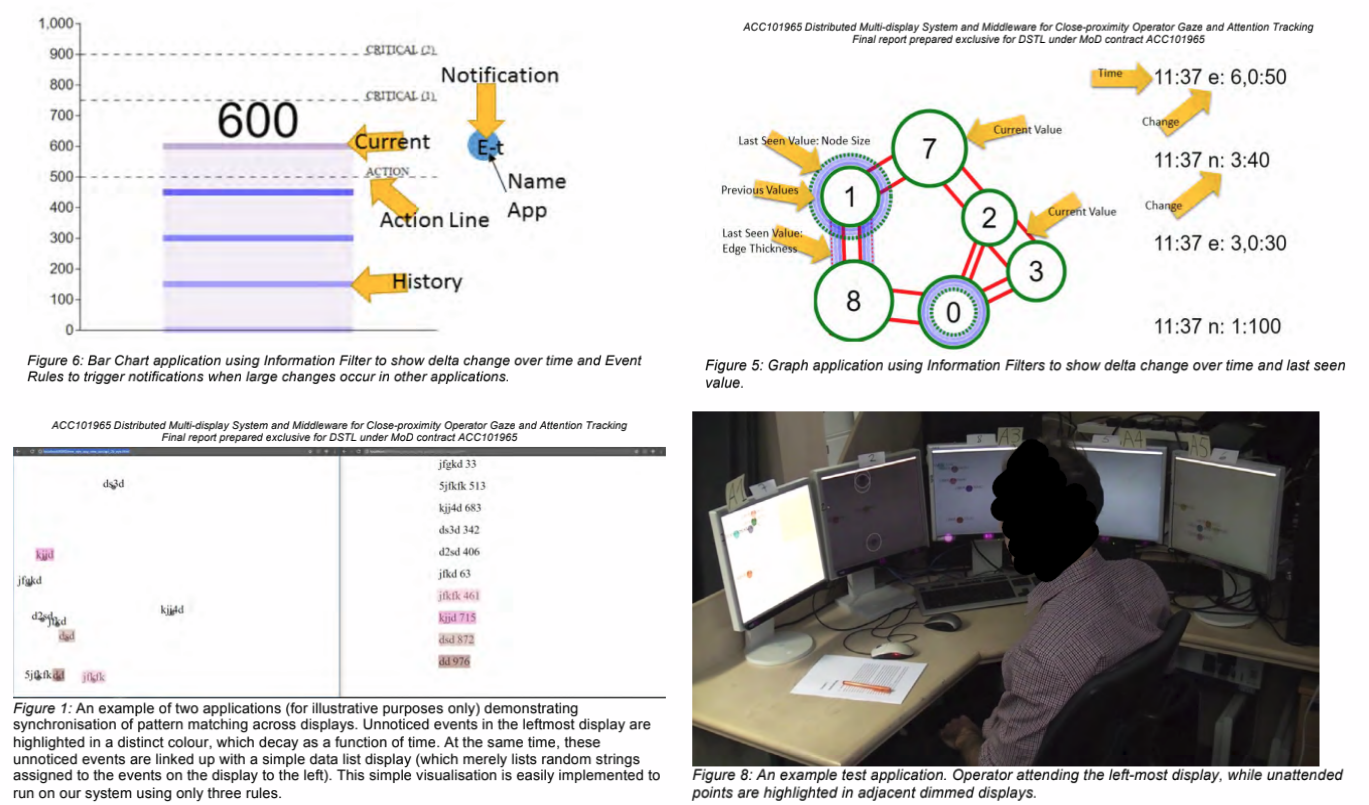
The project’s objective was to deliver an attention-aware distributed middleware for multi-display multitasking applications that used eye-trackers to feed attention events/information to web applications through an API. Use-case was potential deployment in air traffic control. Capabilities included showing the location of unseen data points, visualising the relative age of data, highlighting unattended points with timers and inter-display notifications based on attention focus.
Project highlights and deliverables
- Attended briefings and held meetings with DSTL/UK MoD and National Air Traffic Services (NATs) members at secured sites to gather requirements.
- Delivered six packages and one live demo to stakeholders, as well as reports.
- The final deliverable consisted of the middleware developed in C/C++ that was capable of receiving eye-tracking data from each individually connected machine and aggregating it into global attentional events that could be delivered to subscribed applications and used to trigger events through hooks.
Capabilities of the simulation environment included
- Middleware capable of interacting with Tobii eye-tracking drivers.
- Determination of attention focus through data fusion.
- Configurable discretisation grid for matching data changes to eye fixation events.
- API with hooks for delivering messages/events to applications.
- Overlay library built in Javascript (d3.js) capable of drawing on top of web applications to highlight data points, and show relative data age and relative position of data changes across displays based on the operator’s current focus of attention.
PhD Research
Thesis Title: Design, Implementation And Evaluation Of An Attention Management System
University of Cambridge, UK
- Designed a middleware system architecture with multiple components capable of interoperating with various sensors across multiple networked computers to detect operator’s attentional states within applications, match it to application’s data changes and deliver instructions to applications based on evaluation of live operator and task performance.
- Used a completely agile development philosophy as requirements were discovered through direct experimentation and iteration. All component and test development was Git source controlled.
- Implemented a sensor networking component built in C++ directly interacting with both structured lighting sensors and eye‑tracker drivers in C/C++.
-
Implemented a live monitoring component developed in Python with TCP and WebSockets to directly interact with sensor information and Web applications built in TypeScript.
- Implemented a the live performance visualiser tool in TypeScript/React with d3.js to showcase live operator performance and retrospectively.
- Implemented a simulator in Python that could re‑run captured operator actions to model alternative operational outcomes under different visualisation policies. This could plug into the performance visualiser.
- Evaluated system through experiments involving live testing with whole system integration and simulation using collected participant task performance data. Results published in peer‑reviewed papers.
Additional Research / Software Development / Maintenance Tasks
University of Cambridge, UK
- Participated in the research group’s Scrum group for developing tools/libraries that were used across the entire research group. This included live graphing data through d3.js, Unity interfaces for prototyping, networking libraries for logging results, sensor polling and ML model building.
- Maintained documentation to shared resources and libraries for the research group that I owned.
- Deployed and maintained the VMs and Docker containers used in the research group’s local servers for running experiments and number crunching.
- Developed and maintained Python scripts using psutil to monitor the usage of the research group’s local servers to ensure up-time and catch any user misuse/abuse.
- Used AWS services to test and build ML models from sensor data collected for various research projects. This allowed maximising resource utilisation so only specific parameters in the search grid would get scheduled for building models based on previous results.
- Developed an application that exposed through an API the head pose of an operator in a 5m x 5m room fitted with 8 Microsoft Kinect 2.0 through a purposely built ML classifier model. Work published in HCCS 2018.
- Developed Android apps to collect data on various Fittz Law tasks that were used by the research group in some of their publications.
Education
PhD In Engineering / Computer Science - University Of Cambridge
Graduated Oct 2023
Cambridge, UK
- Thesis title: Design, Implementation and Evaluation of an Attention Management System
- Supervised By Prof Per Ola Kristensson.
- Fully Funded By DSTL (UK MoD).
MPhil in Advanced Computer Science - University Of Cambridge
Graduated July 2013
Cambridge, UK
- Thesis title: A privacy‑preserving advertisement delivery system
- Developed a Python server ad delivery system that provided advertisements to a purposely built Chrome ex‑ tension based on a publish‑subscribe architecture that could not be used to identify individual users and/or their data preferences. All connectivity done over RSA via WebSockets.
- Courses: Security, Data‑centric Networks, Network Theory, Dist. Networks and Mobile App Development.
BSc in Computer Science - University Of St Andrews
Graduated Jun 2012
St Andrews, UK
- Thesis title: A reduced implementation of INLPv4 (Identifier‑Locator Network Protocol ) for Linux.
- Implemented the INLPv4 protocol described in RFC 6740 in C as a kernel‑level module.
Publications
- Nicosia, M., \& Kristensson, P. O. 2024. Risk management in human-in-the-loop AI-assisted attention aware systems. In Putting AI in the Critical Loop (pp. 81-92). Academic Press.
- Nicosia, M. and Kristensson, P.O. 2021. Design principles for AI‑assisted attention aware systems in human‑in‑the‑loop safety critical applications. In Lawless, W.F., Llinas, J., Sofge, D.A. and Mittu, R. (Eds.), Engineering Artificially Intelligent Systems: A Systems Engineering Approach to Realizing Synergistic Capabilities. Cham: Springer Nature.
- Nicosia, M. and Kristensson, P.O. 2020. A conceptual design of an inattention management middleware with adaptive target saliency. In Proceedings of the 41st IEEE Aerospace Conference. IEEE Press.
- Nicosia, M. and Kristensson, P.O. 2018. Inattention management middleware for human‑in‑the‑loop multi‑display applications. In Proceedings of the IEEE Workshop on Human‑Centered Computational Sensing (HCCS 2018). IEEE Press: 71‑76.
- Nicosia, M., Oulasvirta, A. and Kristensson, P.O. 2014. Modeling the perception of user performance. In Proceedings of the 32nd ACM Conference on Human Factors in Computing Systems (CHI 2014). ACM Press: 1747‑1756.
Patents
- Nicosia, L.M., \& Fukui, Y. April 2025. USER STATUS NOTIFICATION METHOD AND USER SUPPORT SYSTEM. Japanese Application no. 2025-063631.
- Nicosia, L.M., \& Fukui, Y. Jan 2026. USER STATUS NOTIFICATION METHOD AND USER SUPPORT SYSTEM. US Application filed.